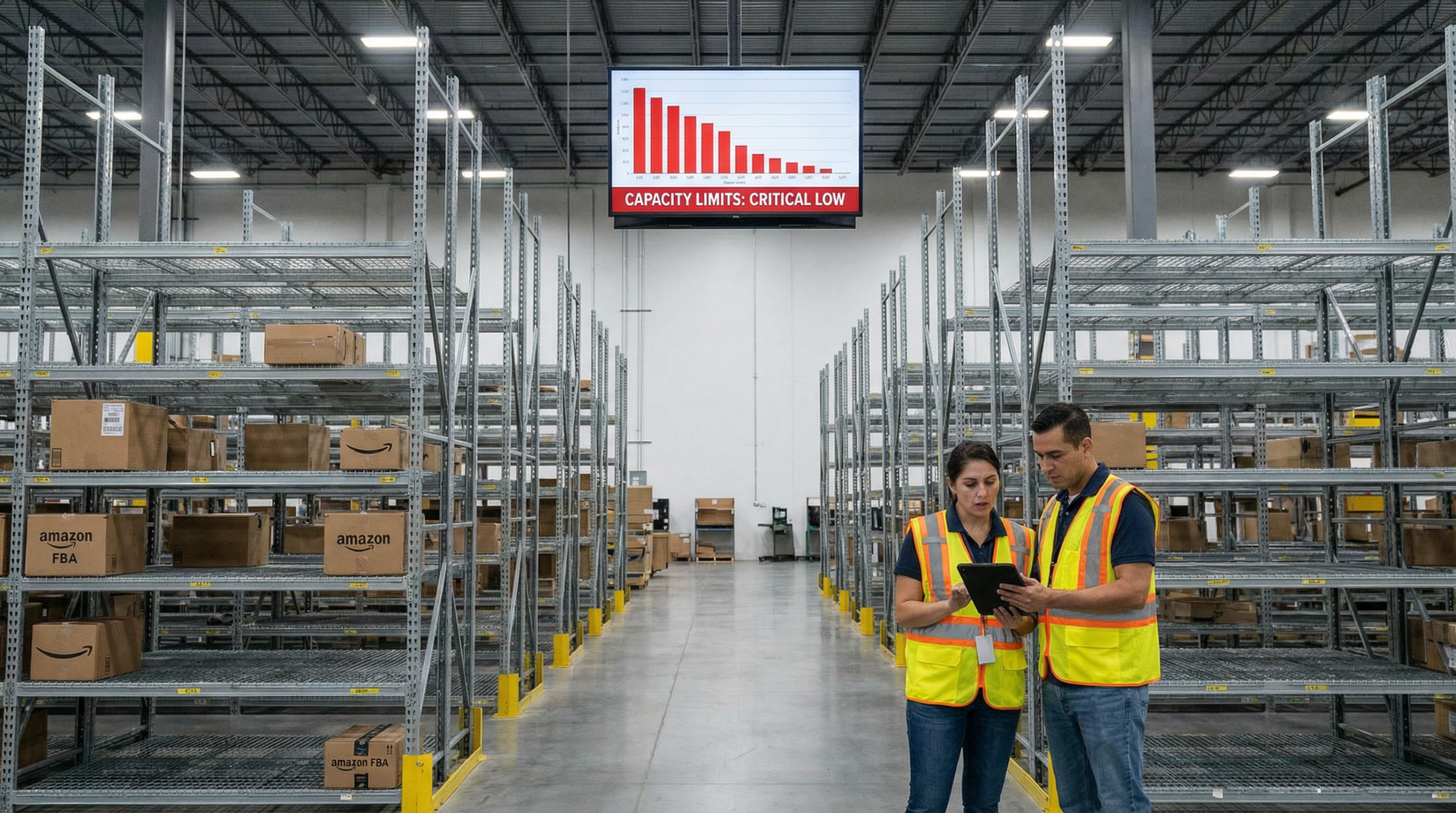
Mastering FBA Capacity Limits for Scalable Growth
FBA capacity limits control how much inventory a brand can send into Amazon fulfillment centres at any given time. Managing them well means improving sell-through, avoiding excess stock, and aligning inventory planning with demand, so brands can reduce the risk of stockouts, penalties, and missed revenue.
What Are FBA Capacity Limits?
FBA (Fulfilment by Amazon) capacity limits are restrictions Amazon places on how much inventory a seller can hold in its fulfilment network. These limits are not fixed and can change based on performance, demand patterns, and how efficiently stock moves through Amazon’s network.
Amazon uses capacity limits to prioritise sellers who:
- Sell inventory quickly
- Avoid overstocking
- Maintain healthy operational metrics
- storage type (standard/oversize/apparel/hazmat)
- cubic feet usage
- restock limits
- historical sales by ASIN
For brands, this means inventory planning now directly affects how much you can sell and how fast you can scale.
The Shift from Volume to Velocity
Many optimisation strategies focus heavily on traffic volume. But Amazon’s capacity model is driven more by how quickly inventory sells through than how many clicks you generate. Your available capacity is influenced by sell-through performance and IPI-related metrics, which reflect factors like excess inventory levels, in-stock rate, and stranded stock. Faster, cleaner stock movement typically supports higher capacity allowances over time.
Strategic Capacity Bidding & Financial Protection
Amazon allows professional sellers to reserve additional capacity through Capacity Manager for a fee. Falling below the IPI threshold (typically 350) can lead to storage reductions and tighter restock limits.
- Performance Credits: We treat bidding as an investment, not as a sunk cost. Amazon grants credits that can offset some or all of the reservation fee if sell-through targets are met.
- Margin-First Logic: We calculate whether the estimated profit from additional units justifies the reservation cost, ensuring we never scale spend unless it supports a positive contribution margin.
The Hybrid Model: Protective Inventory
Relying entirely on FBA, creates a single point of failure. Strategic inventory management is increasingly important for maintaining visibility in AI-assisted discovery tools like Rufus and COSMO. If you are out of stock, ranking and discoverability typically decline.
3PL Strategic Replenishment: We recommend holding deep stock in a more cost-effective third-party logistics (3PL) warehouse and utilising staged replenishment for FBA to maintain a high turnover rate.
- FBM Safety Net: Maintaining a Merchant Fulfilled (FBM) backup ensures that if you hit a capacity ceiling, helps keep your offer purchasable if FBA stock runs out. That can help reduce ranking loss during stock gaps and ensures your brand remains discoverable by Amazon’s AI.
Clean Your Catalogue: Optimise Aged Inventory
Low-velocity SKUs that sit in fulfilment centres for long-aged inventory, especially beyond 180 days, becomes a major liability. They consume cubic footage and suppress your IPI score, leading to inventory bloat.
- Inventory Hygiene: We identify slow-moving products and use targeted removal orders or outlet deals to clear space for best-sellers.
- Proactive Planning: Constant monitoring ensures you avoid the overage fees associated with exceeding allocated capacity, keeping your account efficient and capacity available for high-performing SKUs.
Conclusion: Beyond “Keeping the Lights On”
A lot of Amazon support today is still task-focused – istings get updated, ads get managed, reports get sent. That doesn’t automatically translate into better commercial performance. Capacity limits, sell-through, and inventory health now play a direct role in how much you can grow and how stable that growth is.
FBA capacity is no longer just an operations detail. If stock turns slowly, space tightens. If aged units build up, flexibility drops. Brands that monitor sell-through, clean up weak SKUs, and plan replenishment properly usually get more room to scale and fewer surprises. If you want a working view of how your capacity limits and inventory structure are affecting performance, Market Rocket can review the account and map out practical next steps. You can reach the team at amazon@marketrocket.co.uk or on 02037459090.

Leave a Comment